
Why the tank was invented
Tanks were invented to break the deadlock of trench warfare on the Western Front. In 1915 Winston Churchill, then First Lord of the Admiralty, set up the Landships Committee to find a way across the trenches.
The first prototype was built by William Foster & Co. of Lincoln. The tank’s designers were William Tritton of Fosters and Walter Gordon Wilson, and their machine known as ‘Mother’, with tracks running all round the hull and guns in side sponsons, was the prototype of the Mark I. For the tank, Tritton and Wilson later received the largest award the Royal Commission on Awards to Inventors made to any claimant.
Tanks first went into action on 15 September 1916, at Flers-Courcelette on the Somme. Forty-nine were allotted to the attack, but many broke down before they reached the battle.
The Mark IV
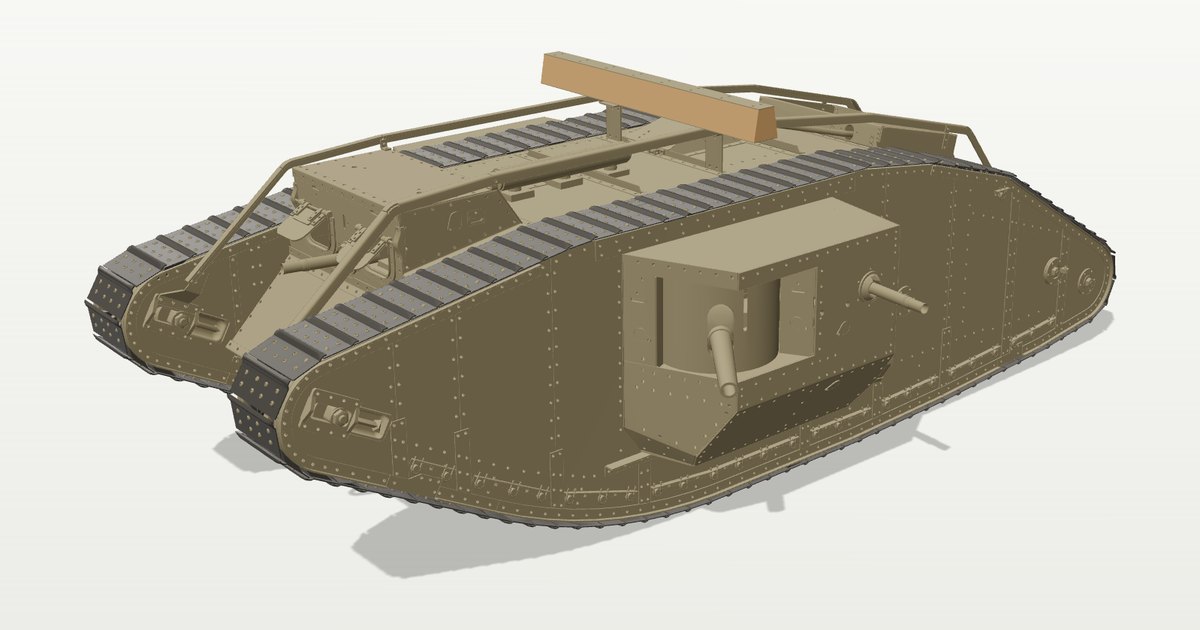
The Mark IV (often written Mk IV) was mechanically based on the Mark I, but the first battles changed it in several ways. The petrol tank was moved out of the crew compartment to an armoured tank at the rear. The side sponsons could be pushed into the hull, so the tank could travel by rail. Lewis machine guns replaced the earlier tanks’ Hotchkiss and Vickers guns, a change that was later reversed, and the male’s 6-pounder guns had shorter barrels than before. The armour was 12 mm thick at its thickest.
Inside worked a crew of eight, and four of them were needed just to drive it: the driver, the commander on the brakes, and two gearsmen. A 105 hp Daimler six-cylinder petrol engine moved a male Mark IV, weighing about 28 tons, at up to about 3.7 mph, roughly walking pace.
Mark IVs were built by several firms, among them Fosters of Lincoln, the Metropolitan works in Birmingham and the Coventry Ordnance Works in Glasgow. About 1,220 were built, including 205 unarmed supply tanks. They entered service in May 1917, and from the middle of that year carried rails above the cab for an unditching beam: the wooden beam you can see on the roof of the 3D model above.
Male and female tanks
The male Mark IV carried two 6-pounder guns as well as machine guns; the female carried machine guns only. Of the 1,015 fighting tanks built, more were females than males. In 1918 some tanks were made into ‘hermaphrodites’, with one male and one female sponson.
Armortek’s 1/6 scale metal kit includes the parts for both the Male and the Female, so you choose which one to build.
In action: Messines, Ypres and Cambrai
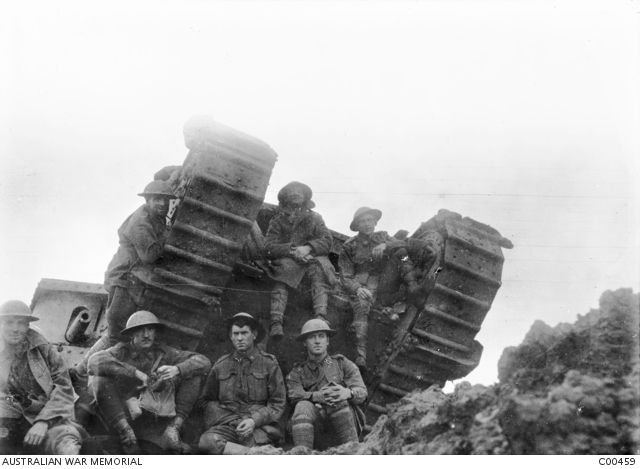
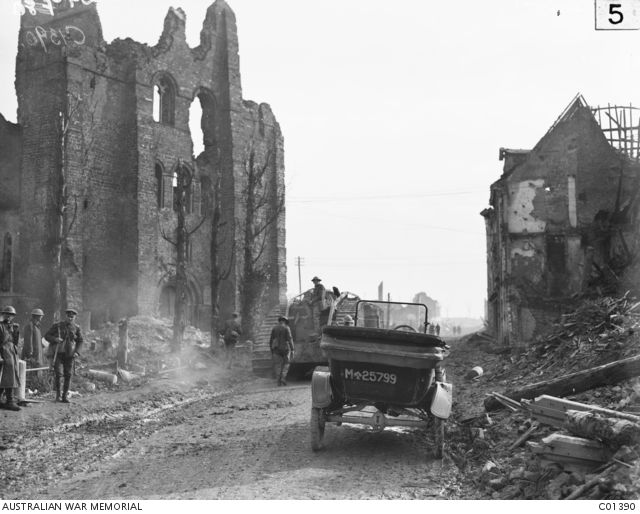
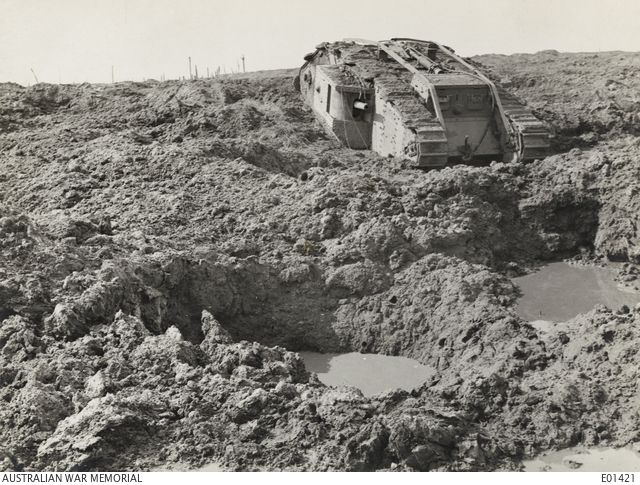
The Mark IV first went into action at Messines Ridge on 7 June 1917. At the Third Battle of Ypres, which began on 31 July 1917, shell-churned mud left the tanks largely ineffective.
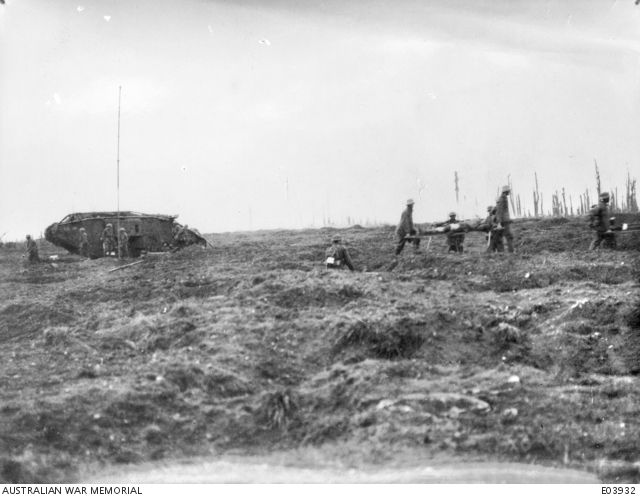
The Battle of Cambrai, which opened on 20 November 1917, was different. It was the first time tanks were used in massed numbers: more than 400 British tanks, most of them Mark IVs. Many carried fascines, huge bundles of brushwood on the rails above the cab, to drop into the wide trenches of the Hindenburg Line.
On the first day the female Mark IV D51 ‘Deborah’, of D Battalion, was knocked out at Flesquières. She was dug up near the village in November 1998, and is now displayed at Flesquières in a building completed in 2017, beside the cemetery where members of her crew are buried.
The first tank against tank battle
The German army captured Mark IVs and put them into its own service.
On 24 April 1918, at Villers-Bretonneux, British Mark IVs met German A7V tanks in the first tank-versus-tank battle. The A7V ‘Nixe’, number 561, commanded by Wilhelm Biltz, first hit and disabled two female Mark IVs. A male Mark IV commanded by Frank Mitchell then knocked Nixe out.
Surviving Mark IV tanks
Fewer than ten Mark IVs survive: sources give six or seven. The Tank Museum at Bovington displays male Mark IV number 2324, given after the war to the Royal Navy’s gunnery school at Portsmouth, HMS Excellent, in thanks for the Navy’s help training Tank Corps gunners. The Australian War Memorial holds the female ‘Grit’, serial 4643. In Ashford, Kent, a Mark IV presented to the town in 1919 still stands in St George’s Square and is Grade II listed, and Deborah is at Flesquières.
The Armortek 1/6 scale Mark IV is modelled on the real tank. Turn it in 3D at the top of this page, and see the metal RC tank kit in the Armortek shop.